
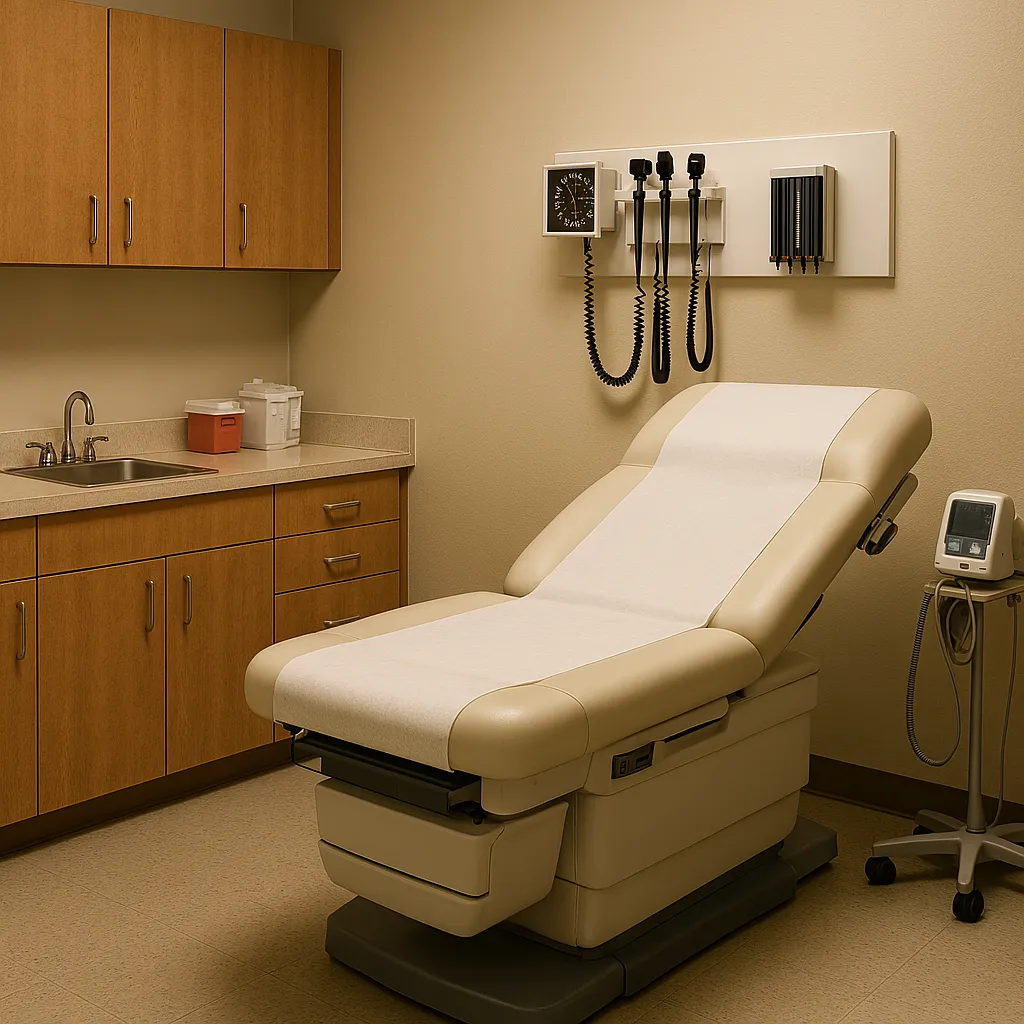
healthcare facility cleaning services is not janitorial work -- it is a specialized discipline that directly impacts patient outcomes, infection rates, and regulatory compliance. The difference between a medical practice cleaning services technician and a general commercial cleaner is measured in training hours, competency assessments, and professional certifications. This guide outlines the mandatory training requirements, voluntary certifications, and ongoing competency programs that Massachusetts healthcare facilities should demand from their environmental services staff -- whether employed in-house or provided through a contracted service.
OSHA Bloodborne Pathogen Training: The Non-Negotiable Foundation
OSHA's Bloodborne Pathogens Standard (29 CFR 1910.1030) is the single most important regulatory training requirement for healthcare facility cleaning services personnel. Any employee who has reasonably anticipated occupational exposure to blood or other potentially infectious materials (OPIM) must receive bloodborne pathogen training -- and virtually all environmental cleaning staff meet this criterion.
Initial Training Requirements
Bloodborne pathogen training must be provided at the time of initial assignment to a position where occupational exposure may occur -- meaning before a new environmental services technician ever enters a clinical facility to perform cleaning duties. The training must be conducted by a qualified instructor and must cover the following elements as specified by OSHA:
- An accessible copy of the regulatory text of 29 CFR 1910.1030 and an explanation of its contents
- A general explanation of the epidemiology, symptoms, and modes of transmission of bloodborne diseases
- An explanation of the employer's Exposure Control Plan and how the employee can obtain a copy
- An explanation of how to recognize tasks and activities that may involve exposure to blood and OPIM
- An explanation of the use and limitations of methods that will prevent or reduce exposure, including engineering controls, work practice controls, and PPE
- Information on the types, proper use, location, removal, handling, decontamination, and disposal of PPE
- An explanation of the basis for PPE selection
- Information on the hepatitis B vaccine, including its efficacy, safety, and that it is offered free of charge
- Information on the appropriate actions to take and persons to contact in an emergency involving blood or OPIM
- An explanation of the procedure to follow if an exposure incident occurs, including the method of reporting and the medical follow-up available
- Information on the post-exposure evaluation and follow-up provided by the employer
Annual Refresher Training
Bloodborne pathogen training is not a one-time event. OSHA requires annual refresher training for all employees with occupational exposure. The annual training must cover the same elements as the initial training and must also address any new or modified tasks and procedures that affect occupational exposure, as well as any changes in the Exposure Control Plan. Training records must be maintained for three years from the date of training and must include the dates of training sessions, the contents or a summary of the training, the names and qualifications of the trainer, and the names and job titles of all attendees.
Hepatitis B Vaccination
As part of the Bloodborne Pathogens Standard, employers must offer the hepatitis B vaccination series to all employees with occupational exposure, at no cost to the employee. Environmental services staff working in clinical settings should be offered vaccination within 10 working days of initial assignment. If an employee declines the vaccine, they must sign a declination form, which must be retained in their personnel file. The employee retains the right to accept the vaccine at a later date.

ISSA/CMI Certification: The Industry Gold Standard
The Cleaning Management Institute (CMI), a division of ISSA (the International Sanitary Supply Association), offers the most widely recognized professional certifications for cleaning industry professionals. For healthcare facility cleaning services, two certifications are particularly relevant.
Certified Custodial Technician (CCT)
The CCT certification is designed for front-line environmental services technicians and covers fundamental cleaning principles, chemical safety, equipment operation, and facility-specific protocols. The certification program includes coursework in surface types and appropriate cleaning methods, chemical safety and proper product use, floor care fundamentals, restroom cleaning and sanitation, carpet care and maintenance, and safety and security awareness. While the CCT is not environment-specific, it establishes a baseline of professional competency that distinguishes trained technicians from untrained workers. clinical environments that require CCT certification from their environmental services staff -- or from contracted service providers -- demonstrate a commitment to professional standards.
Certified Healthcare Environmental Services Technician (CHEST)
The CHEST certification is specifically designed for environmental services professionals working in clinical settings. It covers all the content areas of the CCT plus environment-specific topics including infection prevention and control principles, regulatory requirements specific to healthcare (OSHA, CDC, CMS), patient safety considerations, isolation room environmental cleaning protocols, terminal cleaning procedures, and environment-specific waste management. The CHEST certification requires candidates to complete a training program and pass a written examination. Certification must be renewed periodically through continuing education credits, ensuring that certified professionals maintain current knowledge of evolving healthcare facility cleaning services standards.
CDC Training Resources for Environmental Services
The Centers for Disease Control and Prevention (CDC) provides several training modules and educational resources specifically designed for healthcare facility cleaning services personnel. These resources are free, evidence-based, and represent the authoritative standard for infection prevention training.
Environmental Infection Control Guidelines
The CDC's "Guidelines for Environmental Infection Control in Health-Care Facilities" provides comprehensive recommendations for environmental cleaning and disinfection. While the full guidelines document is primarily written for infection preventionists and facility managers, the CDC has developed supplementary training materials that distill the key principles into formats accessible to front-line environmental services staff. These materials cover the Spaulding Classification system for determining the level of disinfection required, proper cleaning and disinfection techniques for clinical surfaces, the hierarchy of cleaning (clean before disinfect, clean from least contaminated to most contaminated), hand hygiene requirements for environmental services personnel, and outbreak response environmental cleaning protocols.
Isolation Precaution Training
The CDC's transmission-based precautions -- Contact Precautions, Droplet Precautions, and Airborne Precautions -- have specific implications for environmental services. Cleaning staff must be trained on the additional PPE, cleaning procedures, and waste handling requirements associated with each type of isolation. Contact Precautions require gown and gloves for room entry and enhanced terminal cleaning upon patient discharge. Droplet Precautions require a surgical mask within six feet of the patient and standard environmental cleaning protocols. Airborne Precautions require an N95 or higher respirator (with documented fit testing) and specific room ventilation considerations that affect cleaning timing and access.
PPE Competency: Beyond Knowing What to Wear
Personal Protective Equipment training for healthcare facility cleaning services goes far beyond simply identifying which items to wear. Staff must demonstrate competency in the correct sequence for donning and doffing PPE, which is critical for preventing self-contamination.
Donning Sequence
The standard donning sequence for healthcare facility cleaning services is gown first, then mask or respirator, then eye protection (goggles or face shield), then gloves. Gloves are donned last and should extend over the cuffs of the gown to ensure complete skin coverage. Each step must be performed correctly: the gown must be fully secured at the neck and waist, the mask must fit snugly over the nose and mouth with the nosepiece adjusted, and gloves must be inspected for tears or defects before use.
Doffing Sequence
Removing PPE is the highest-risk phase for self-contamination and requires careful technique. The standard doffing sequence is gloves first (using the glove-in-glove technique to avoid touching the contaminated outer surface), then eye protection (removed by grasping the earpieces or headband, not the front of the shield), then gown (removed by pulling from the shoulders, rolling the contaminated surface inward), and finally mask or respirator (removed by grasping the ties or elastic bands, not the front of the mask). Hand hygiene must be performed immediately after removing each piece of PPE and again after all PPE has been removed.
Competency Verification
Training alone is insufficient -- competency must be verified through direct observation. Environmental services supervisors should conduct periodic competency assessments where staff demonstrate the complete donning and doffing sequence. Observed competency checks should be documented and repeated at minimum annually, as well as whenever new PPE types are introduced or when competency deficiencies are identified.
Professionally Trained Environmental Cleaning Teams
Every Dory's Cleaning Services technician completes comprehensive training in bloodborne pathogens, infection control, PPE protocols, and environment-specific cleaning procedures before entering any Massachusetts healthcare facility.
Schedule Your AssessmentChemical Safety Training: GHS and Safety Data Sheets
The Globally Harmonized System of Classification and Labelling of Chemicals (GHS) is the international standard adopted by OSHA for communicating chemical hazard information. All medical facility cleaning services staff must be trained on GHS fundamentals as part of OSHA's Hazard Communication Standard (HazCom 2012).
GHS Pictograms and Signal Words
Training must cover the nine GHS hazard pictograms and their meanings, the distinction between "Danger" (more severe hazards) and "Warning" (less severe hazards) signal words, and how to read product labels formatted according to GHS standards. Environmental services staff should be able to quickly identify the hazards associated with any cleaning or disinfecting product by reading its GHS-compliant label. This is particularly important in clinical settings where multiple chemical products may be used in a single shift, each with different hazard profiles and safety requirements.
Safety Data Sheet Interpretation
Staff must know how to access and interpret Safety Data Sheets (SDS) for all products they use. Practical SDS training should focus on the sections most relevant to daily environmental services work: Section 2 (Hazards Identification) for understanding the risks of each product, Section 4 (First Aid Measures) for knowing what to do in case of exposure, Section 7 (Handling and Storage) for proper product management, Section 8 (Exposure Controls/Personal Protection) for understanding required PPE, and Section 11 (Toxicological Information) for understanding health effects of exposure. Environmental services teams should have access to SDS documents at all times during their shifts, either through physical binders maintained in accessible locations or through mobile electronic access systems.
Infection Control Orientation for New Staff
Every new environmental services employee assigned to a healthcare facility should complete a comprehensive infection control orientation before performing any cleaning duties. This orientation goes beyond general bloodborne pathogen training to address the specific infection prevention culture and protocols of the healthcare setting.
Core Orientation Elements
- Chain of infection: Understanding how infections spread through the six links (infectious agent, reservoir, portal of exit, mode of transmission, portal of entry, susceptible host) and how environmental services breaks the chain at the "mode of transmission" link
- Standard Precautions: The foundational infection prevention practices that apply to all patient care regardless of diagnosis, including hand hygiene, PPE use, respiratory hygiene/cough etiquette, and safe injection practices
- Healthcare-associated infections (HAIs): An overview of the most common HAIs, their impact on patients, and the role of environmental contamination in their transmission
- Antibiotic-resistant organisms: Understanding MRSA, VRE, CRE, and C. diff -- what they are, why they are dangerous, and the enhanced environmental cleaning required when these organisms are present
- Hand hygiene: The WHO's five moments for hand hygiene adapted for environmental services, including proper handwashing technique and appropriate use of alcohol-based hand sanitizers
- Facility-specific protocols: Cleaning product inventory and usage, color-coded cleaning cloth and mop systems, room-specific cleaning checklists, waste segregation procedures, and communication protocols with clinical staff
Ongoing Competency Assessment
Initial training and certification establish a baseline of knowledge and skill. Maintaining competency over time requires a structured program of ongoing assessment, feedback, and continuing education.
Direct Observation Audits
Supervisors should regularly observe environmental services staff performing their duties and evaluate their adherence to established protocols. Observation audits should cover proper PPE use (donning, doffing, and during cleaning activities), correct cleaning and disinfection technique (clean before disinfect, proper contact time adherence), appropriate product selection for each surface and situation, proper waste segregation and handling, hand hygiene compliance, and documentation completion (cleaning logs, incident reports). Audit results should be documented and shared with the individual staff member in a constructive feedback session. Patterns of non-compliance should trigger targeted retraining rather than punitive action.
Objective Verification Methods
Beyond observational audits, healthcare facilities should employ objective measurement tools to verify cleaning effectiveness. ATP (adenosine triphosphate) bioluminescence testing provides immediate, quantitative measurement of surface cleanliness by detecting organic material remaining on a surface after cleaning. Fluorescent marker systems use invisible markers applied to surfaces before cleaning; after cleaning, the surfaces are inspected under UV light to determine which markers were successfully removed. These tools provide objective data that supplements supervisory observation and creates accountability for cleaning outcomes rather than just cleaning processes.
Annual Competency Review
Every environmental services staff member should undergo a comprehensive annual competency review that includes written or electronic knowledge assessment covering all required training topics, practical skills demonstration (PPE donning and doffing, proper cleaning technique, chemical dilution accuracy, equipment operation), review of audit results from the preceding year, identification of knowledge gaps or skill deficiencies, development of an individualized improvement plan for any identified deficiencies, and documentation of the competency review in the employee's training file. This annual review should be separate from general performance evaluations and focus specifically on the technical competencies required for medical practice cleaning services.
Training and certification for healthcare facility cleaning services is an investment in patient safety, staff protection, and regulatory compliance. Massachusetts healthcare facilities that establish rigorous training standards, pursue professional certifications, and implement ongoing competency assessment programs create environmental services teams capable of meeting the demanding requirements of healthcare infection prevention. The cost of comprehensive training is measurable; the cost of inadequate training -- in healthcare-associated infections, regulatory penalties, and patient harm -- is incalculable.
Where this applies
We put this guide into practice in these services across 109 Massachusetts cities and towns: