Infection control in medical offices is not optional -- it is a legal requirement, an ethical obligation, and a cornerstone of patient safety. For Massachusetts healthcare facilities, maintaining rigorous healthcare standards means navigating a complex web of CDC guidelines, OSHA regulations, and state-specific mandates. This comprehensive 2026 guide breaks down everything medical office managers, practice administrators, and facility directors need to know about infection control best practices for environmental services.
Why Infection Control in Medical Offices Matters More Than Ever
Healthcare-associated infections (HAIs) affect approximately 1 in 31 hospital patients on any given day, according to the CDC. While medical offices and outpatient settings operate differently from hospitals, they are not immune to the transmission of infectious agents through contaminated environmental surfaces. In fact, outpatient settings present unique challenges: higher patient turnover, shorter visit windows, and limited time between appointments for thorough cleaning.
Massachusetts medical offices must contend with additional considerations. The Commonwealth's Department of Public Health enforces strict facility standards, and the state has seen increased scrutiny of outpatient infection prevention programs in recent years. Whether you operate a primary care practice in Worcester, a specialty clinic in Boston, or a multi-provider office in Framingham, robust environmental infection control is essential to protecting patients, staff, and your practice's reputation.
Beyond regulatory compliance, effective infection control directly impacts your bottom line. Facilities with documented HAI outbreaks face potential liability claims, loss of patient trust, and possible sanctions from licensing bodies. Proactive investment in proper environmental services is far more cost-effective than reactive damage control.
Understanding the Difference: Cleaning vs. Disinfecting vs. Sterilizing
One of the most common sources of confusion in medical practice cleaning services is the distinction between cleaning, disinfecting, and sterilizing. These are not interchangeable terms, and each serves a specific purpose in your infection control program.
Cleaning
Cleaning refers to the physical removal of dirt, debris, and organic matter from surfaces using soap or detergent and water. Cleaning does not kill pathogens, but it is a critical first step because organic material can shield microorganisms from disinfectants. All surfaces must be cleaned before they are disinfected. Skipping the cleaning step and proceeding directly to disinfection is a common mistake that significantly reduces the efficacy of disinfectant products.
Disinfecting
Disinfection uses EPA-registered chemical agents to eliminate most pathogenic microorganisms on surfaces. In clinical settings, the CDC recommends using hospital-grade disinfectants that are registered with the Environmental Protection Agency (EPA). The level of disinfection required depends on the Spaulding Classification of the surface or item:
- Non-critical items (surfaces that contact intact skin): Low-level disinfection is typically sufficient. This includes exam tables, bed rails, countertops, and doorknobs.
- Semi-critical items (surfaces that contact mucous membranes): High-level disinfection is required. This includes certain reusable medical devices.
- Critical items (items that enter sterile tissue): Sterilization is required -- these are handled by your clinical sterilization processes, not environmental services.
Sterilizing
Sterilization destroys all forms of microbial life, including bacterial spores. In the context of environmental services, sterilization is generally not applied to room surfaces. It is reserved for surgical instruments and critical medical devices processed through autoclaves or other sterilization equipment. Environmental services teams should understand this distinction to avoid confusion about their scope of responsibility.
CDC Guidelines for Environmental Infection Control in Medical Offices
The CDC's "Guidelines for Environmental Infection Control in Health-Care Facilities" remains the foundational document for healthcare facility cleaning services. Here are the key principles that apply to Massachusetts medical offices:
Surface Classification and Cleaning Frequency
The CDC classifies environmental surfaces into two categories:
- Housekeeping surfaces (floors, walls, tabletops): These require regular cleaning and disinfection on a scheduled basis. While floors carry a lower risk of disease transmission, they should still be cleaned with EPA-registered products, particularly in areas where spills or contamination may occur.
- Medical equipment surfaces (exam tables, diagnostic equipment, blood pressure cuffs): These require cleaning and disinfection between each patient contact. This is non-negotiable in any infection control program.
High-Touch Surface Protocols
High-touch surfaces are the primary vectors for pathogen transmission in medical offices. The CDC specifically identifies the following surfaces for enhanced cleaning and disinfection frequency:
- Door handles and push plates
- Light switches
- Handrails
- Elevator buttons
- Countertops at check-in and checkout areas
- Shared pens and clipboards
- Waiting room chair armrests
- Restroom fixtures (faucet handles, toilet flush levers, stall locks)
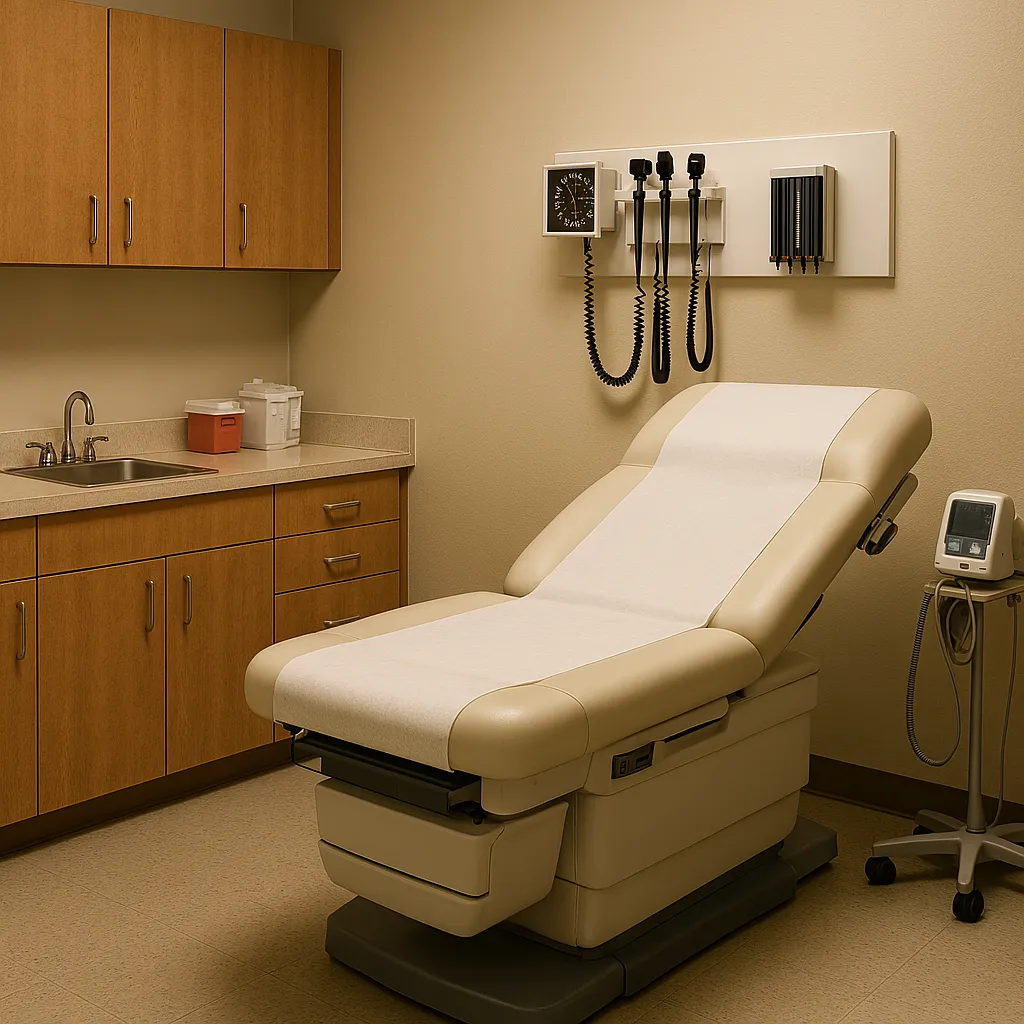
- Exam room surfaces (tables, stools, cabinets)
- Computer keyboards and mice at shared workstations
These surfaces should be disinfected multiple times per day -- at minimum between patient visits in clinical areas, and at least every two to four hours in common areas such as waiting rooms and restrooms. During periods of elevated community illness, such as flu season or respiratory virus outbreaks, cleaning frequency should increase further.
EPA-Registered Disinfectants: What Massachusetts Medical Offices Need to Know
Not all disinfectants are created equal, and using the wrong product in a healthcare setting can leave your facility non-compliant and your patients at risk. The EPA maintains a series of registered product lists for clinical use:
Key EPA Lists for clinical facilities
- List N: Disinfectants effective against SARS-CoV-2 (COVID-19). While the acute pandemic phase has passed, respiratory viruses remain a concern, and List N products continue to be a reliable baseline for clinical settings.
- List K: Products effective against Clostridioides difficile (C. diff) spores. Essential for facilities that treat elderly or immunocompromised patients.
- List P: Products effective against Candida auris, an emerging fungal pathogen of growing concern in clinical settings.
When selecting disinfectants for your facility, always verify the EPA registration number on the product label and confirm that the product is effective against the specific pathogens most relevant to your practice. Product contact time -- the amount of time a surface must remain visibly wet with the disinfectant to achieve the labeled kill claims -- is equally important. Many healthcare facilities fail to observe proper contact times, rendering the disinfection process ineffective.
Common Contact Time Mistakes
A disinfectant with a 10-minute contact time requires the surface to remain wet for the full 10 minutes. Wiping the surface dry after 30 seconds provides minimal pathogen reduction. To address this challenge, many healthcare facility cleaning services providers are transitioning to products with shorter contact times (1-3 minutes) that are more practical for high-volume clinical environments. Ensure your cleaning team understands the specific contact time for every product they use, and verify compliance through regular observation and training.
Cleaning Frequency Schedules for Medical Offices
A well-structured cleaning schedule is the backbone of any infection control program. Here is a recommended framework for Massachusetts medical offices:
Between Each Patient (Clinical Areas)
- Wipe and disinfect the exam table with an EPA-registered healthcare disinfectant
- Disinfect all touched surfaces: countertops, cabinet handles, light switches, door handles
- Replace exam table paper or barrier
- Disinfect any shared diagnostic equipment (stethoscopes, blood pressure cuffs)
- Empty and replace sharps containers as needed
- Ensure hand hygiene supplies (soap, sanitizer, paper towels) are fully stocked
Multiple Times Daily
- Disinfect waiting room high-touch surfaces every 2-4 hours
- Clean and disinfect restrooms every 2-4 hours
- Disinfect check-in counters and shared equipment after each use or at minimum every 2 hours
- Empty waste receptacles when three-quarters full
Daily (End of Day)
- Comprehensive cleaning and disinfection of all clinical areas
- Floor care: vacuum carpeted areas, damp mop hard floors with disinfectant
- Thorough restroom cleaning and restocking
- Break room and staff area cleaning
- Empty all waste, including regulated medical waste containers
- Dust horizontal surfaces in low-traffic areas
Weekly
- High dusting of vents, light fixtures, and ceiling areas
- Detailed cleaning of baseboards and wall surfaces
- Interior glass and partition cleaning
- Thorough sanitation of break rooms and staff areas
Monthly and Quarterly
- Floor stripping and refinishing (hard floors)
- Carpet deep extraction cleaning
- HVAC vent and filter assessment
- Comprehensive facility audit and documentation review
Staff Training Requirements for Cleaning Services
Your environmental services team is only as effective as their training. The CDC, OSHA, and Massachusetts regulations all mandate specific training elements for personnel who clean and disinfect clinical environments.
Essential Training Topics
- Bloodborne pathogens: OSHA's Bloodborne Pathogens Standard (29 CFR 1910.1030) requires annual training for all employees with potential occupational exposure to blood and other potentially infectious materials (OPIM). Environmental services staff must understand how to handle blood spills, use appropriate PPE, and follow proper disposal procedures for regulated waste.
- Chemical safety and SDS: OSHA's Hazard Communication Standard requires that all employees who handle cleaning chemicals understand Safety Data Sheets (SDS), proper dilution ratios, PPE requirements, and emergency procedures for chemical exposure.
- Proper PPE use: Training on when and how to use gloves, gowns, eye protection, and masks during cleaning and disinfection procedures. Staff must understand the correct sequence for donning and doffing PPE to prevent self-contamination.
- Hand hygiene: The single most important infection prevention measure. Staff must be trained on the WHO's five moments for hand hygiene and proper handwashing technique.
- Product-specific training: Each disinfectant product requires training on proper use, dilution, contact time, and safety precautions. Generic "use the spray and wipe" instructions are insufficient.
- Waste segregation: Proper identification and handling of regular waste, regulated medical waste, sharps, pharmaceutical waste, and recyclable materials.
Training Documentation
All training must be documented and retained. Documentation should include the date of training, topics covered, trainer identification, and signatures of attendees. Massachusetts healthcare facilities should retain training records for a minimum of three years, though best practice is to maintain records indefinitely. These records are frequently requested during inspections, accreditation surveys, and in the event of an infection-related incident.
Request a Free Facility Assessment
Dory's Cleaning Services provides comprehensive infection control assessments for medical offices throughout Massachusetts. Our team evaluates your current protocols, identifies gaps, and develops customized environmental services plans aligned with CDC guidance.
Schedule Your AssessmentCompliance Documentation: Building Your Infection Control Paper Trail
Documentation is a critical but often neglected aspect of infection control. In the event of a patient complaint, infection outbreak investigation, or regulatory inspection, your documentation is your evidence that proper protocols were followed.
Essential Documentation Elements
- Cleaning logs: Daily logs signed by environmental services staff documenting completion of all scheduled cleaning and disinfection tasks, including timestamps and room-by-room verification.
- Product inventory and SDS binder: Current Safety Data Sheets for all cleaning and disinfection products, with documentation of product lot numbers and expiration dates.
- Training records: Comprehensive records of all staff training, including initial orientation, annual refreshers, and product-specific training.
- Incident reports: Documentation of any blood or body fluid spills, cleaning protocol deviations, or infection-related events, including the corrective actions taken.
- Quality assurance audits: Regular inspection records showing that environmental cleaning standards are being met, including any deficiencies identified and corrective actions implemented.
- Equipment maintenance logs: Records of cleaning equipment maintenance, calibration, and replacement schedules.
Massachusetts-Specific Considerations
In addition to federal CDC and OSHA requirements, Massachusetts medical offices must comply with state-specific regulations:
- MA DPH regulations: The Massachusetts Department of Public Health establishes facility licensing standards that include environmental cleanliness requirements. These apply to physician offices, clinics, ambulatory surgery centers, and other outpatient facilities.
- Regulated medical waste: Massachusetts regulates the handling, storage, transport, and disposal of regulated medical waste under 105 CMR 480. Environmental services teams must be trained on proper waste segregation and handling procedures specific to the Commonwealth's requirements.
- Indoor air quality: Massachusetts has specific requirements for indoor air quality in commercial and clinical settings that affect ventilation, HVAC maintenance, and the use of cleaning chemicals.
Common Infection Control Mistakes to Avoid
After 22 years of providing environmental services to Massachusetts healthcare facilities, we consistently observe these common pitfalls:
- Using household-grade products: Consumer cleaning products are not formulated for clinical use and may not meet EPA registration requirements for pathogen kill claims.
- Ignoring contact times: Spraying and immediately wiping disinfectant provides almost no antimicrobial benefit. Always observe the full contact time listed on the product label.
- Cross-contamination with cleaning cloths: Using the same cloth across multiple surfaces or rooms spreads pathogens. Implement a color-coded microfiber system with dedicated cloths for different areas (clinical rooms, restrooms, common areas).
- Neglecting hand hygiene between rooms: Environmental services staff must perform hand hygiene when entering and exiting each patient care area.
- Inconsistent waste segregation: Mixing regulated medical waste with general waste creates compliance violations and safety hazards. Conversely, placing non-regulated waste in red bags increases disposal costs unnecessarily.
- Lack of documentation: "If it isn't documented, it didn't happen" is a governing principle in clinical settings. Undocumented cleaning is indefensible during inspections or litigation.
- Dilution errors: Improperly diluted concentrates -- whether too strong or too weak -- compromise both efficacy and safety. Use automated dilution systems whenever possible.
Building a Culture of Infection Prevention
Effective infection control is not solely the responsibility of the environmental services team. It requires a facility-wide culture of prevention that includes clinical staff, administrative personnel, and leadership. Environmental services professionals should be integrated into your facility's infection control committee and have a direct line of communication with your infection preventionist or designated infection control officer.
Regular interdisciplinary meetings, shared metrics, and mutual accountability create an environment where infection prevention is everyone's priority. When environmental services staff feel valued and empowered as members of the clinical team -- rather than treated as background workers -- the quality of their work and their commitment to protocols improves measurably.
Infection control in medical offices is a continuous process that demands vigilance, proper training, the right products, and thorough documentation. Massachusetts facilities that invest in professional healthcare facility cleaning services position themselves to protect patients, satisfy regulators, and build the trust that sustains a successful practice.
Where this applies
We put this guide into practice in these services across 109 Massachusetts cities and towns: