Choosing a healthcare facility cleaning services provider for a clinical environment is fundamentally different from hiring a company to clean a standard office or retail space. The stakes are higher, the regulatory requirements are more complex, and the consequences of a poor choice can directly affect patient safety. For Massachusetts medical offices, clinics, and outpatient facilities, selecting the right healthcare facility cleaning services partner requires careful evaluation of credentials, experience, and operational capabilities. This guide walks you through exactly what to look for, what to avoid, and which questions will separate qualified providers from the rest.
Environmental Cleaning vs. Regular Commercial Cleaning: Why the Difference Matters
Before evaluating potential providers, it is essential to understand why environmental cleaning is a specialized discipline that cannot be treated as a commodity service.
Regular commercial cleaning focuses on appearance: vacuumed carpets, clean restrooms, dust-free surfaces, and presentable lobbies. The goal is a visually clean environment. Healthcare facility cleaning services share those aesthetic goals but add a critical layer: pathogen reduction and infection prevention. The difference is the difference between a surface that looks clean and a surface that is microbiologically safe for patients with compromised immune systems.
Key Differences Between Healthcare and Commercial Cleaning
- Product requirements: healthcare facilities require EPA-registered hospital-grade disinfectants with documented kill claims against specific healthcare-associated pathogens. Standard commercial cleaning products do not meet these requirements.
- Protocol complexity: Healthcare cleaning follows structured protocols that specify cleaning sequences, contact times, and PPE requirements for different areas and risk levels. There is no equivalent in standard commercial cleaning.
- Regulatory oversight: healthcare facilities are subject to inspection by the Massachusetts Department of Public Health, OSHA, and potentially accrediting bodies such as The Joint Commission or AAAHC. Cleaning failures can result in citations, fines, or loss of licensure.
- Waste handling: Healthcare environments generate regulated medical waste, sharps, and potentially pharmaceutical waste that require specific handling, storage, and disposal procedures under Massachusetts law (105 CMR 480).
- Patient privacy: Environmental services staff in clinical settings have access to patient care areas and may encounter protected health information (PHI). They must be trained on HIPAA compliance and patient confidentiality.
- Documentation standards: Healthcare cleaning requires detailed logging, audit trails, and compliance documentation that far exceeds the scope of a commercial cleaning checklist.
A company that excels at cleaning corporate offices may be entirely unequipped to service a medical facility. Choosing a provider without environment-specific experience puts your patients, your staff, and your license at risk.
Essential Certifications and Credentials to Look For
When evaluating healthcare facility cleaning services providers in Massachusetts, the following credentials should be considered minimum qualifications:
Insurance and Bonding
- General liability insurance: A minimum of $1 million per occurrence, with $2 million aggregate, is standard for medical facility work. Some facilities require higher limits. Request a current Certificate of Insurance (COI) and verify it directly with the insurer.
- Workers' compensation insurance: Required by Massachusetts law for employers with one or more employees. This protects your facility from liability if a cleaning worker is injured on your premises.
- Professional liability / errors and omissions: While not universally required, this coverage protects against claims arising from inadequate cleaning or sanitation that leads to patient harm.
- Surety bonding: Provides financial protection against theft or dishonesty by environmental cleaning staff who have unsupervised access to your facility.
Industry Certifications
- ISSA Cleaning Industry Management Standard (CIMS): An industry-recognized certification that validates management, operations, and quality systems. While not environment-specific, it demonstrates organizational maturity.
- Bloodborne pathogens training certification: All staff working in healthcare facilities must have current OSHA Bloodborne Pathogens Standard training (29 CFR 1910.1030). Ask for documentation.
- HAZCOM / GHS training: Staff must be trained on OSHA's Hazard Communication Standard and the Globally Harmonized System for chemical labeling and Safety Data Sheets.
- State licensing: Massachusetts requires proper licensing for commercial facility maintenance work. Verify the provider's license and insurance status through the Massachusetts Office of Consumer Affairs.

Questions to Ask Prospective Cleaning Services
The questions you ask during the evaluation process will reveal more about a provider's capabilities than any marketing materials. Here are the essential questions, along with what the right answers should sound like:
Experience and Specialization
- "How long have you been providing healthcare facility cleaning services specifically to healthcare facilities?" Look for a minimum of 3-5 years of dedicated clinical experience. Companies that have recently pivoted from commercial to environmental cleaning may lack the institutional knowledge needed for complex compliance environments.
- "What types of clinical facilities do you currently serve?" The best answers reference specific facility types: medical offices, outpatient surgery centers, dental practices, dialysis clinics, urgent care facilities. Vague answers such as "we clean all kinds of buildings" are a warning sign.
- "Can you provide references from current healthcare facility clients in Massachusetts?" A qualified provider will readily offer references. Contact them and ask about reliability, quality consistency, and responsiveness to issues.
Products and Protocols
- "What disinfectant products do you use, and can you provide their EPA registration numbers?" A knowledgeable provider will name specific products and their EPA registration numbers without hesitation. They should also be able to explain why they selected those particular products for clinical use.
- "What are the contact times for your primary disinfectants, and how do you ensure compliance?" This question tests whether the company understands that disinfection is a time-dependent process. The answer should include specific contact times and mention training, supervision, or technology (such as electrostatic sprayers) that supports compliance.
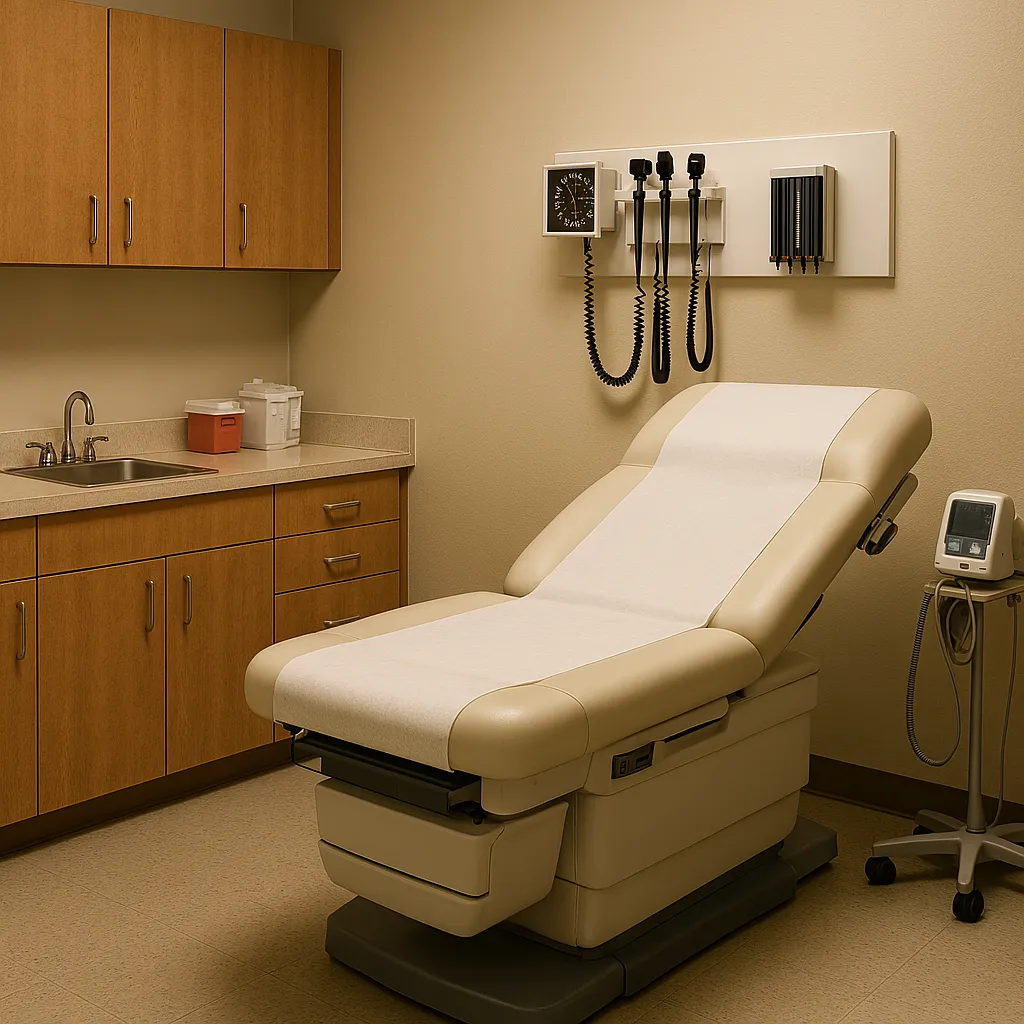
- "Describe your cleaning sequence for an exam room turnover between patients." A qualified provider will describe a systematic, top-to-bottom approach, specifying the order of operations, the products used at each stage, and the PPE required. If they cannot articulate this clearly, they are not prepared for healthcare work.
Staffing and Training
- "What training do your staff receive before they are assigned to a healthcare facility?" Look for answers that include bloodborne pathogens training, chemical safety, PPE use, hand hygiene, waste segregation, HIPAA awareness, and product-specific training. Initial training should be documented and followed by ongoing education.
- "How do you handle staff turnover, and what is your process for onboarding replacements?" High turnover is common in the cleaning industry. The key question is whether the company has a robust onboarding process that ensures new staff are fully trained before they work in your facility -- not learning on the job.
- "Do you conduct background checks on all employees?" Given that environmental cleaning staff will have access to patient care areas, medication storage, and potentially PHI, background screening is essential. The answer should be an unqualified "yes."
Documentation and Quality Assurance
- "What documentation do you provide to demonstrate cleaning compliance?" Expect answers that include daily cleaning logs, inspection reports, training records, and product SDS binders. Some providers offer digital documentation platforms that provide real-time visibility into task completion.
- "How do you handle quality assurance, and how often do you conduct inspections?" Look for a structured QA program with regular supervisory inspections, measurable standards, and a documented corrective action process for deficiencies.
- "What happens when a cleaning issue is identified? What is your response time?" clinical environments cannot wait 48 hours for a cleaning problem to be addressed. The answer should include same-day response capabilities and a clear escalation protocol.
Request a Free Facility Assessment
Dory's Cleaning Services provides complimentary on-site assessments for Massachusetts healthcare facilities. We evaluate your current environmental cleaning program, identify compliance gaps, and present a customized environmental services plan tailored to your facility's specific needs.
Schedule Your AssessmentRed Flags: Warning Signs of an Unqualified Provider
Knowing what to avoid is just as important as knowing what to seek. The following red flags should disqualify a prospective healthcare facility cleaning services from consideration:
- No environment-specific references: If a company cannot provide references from current healthcare facility clients, they do not have the experience your facility requires.
- Unable to name their disinfectant products: A company that does not know what products they use -- or that uses consumer-grade products -- is not equipped for healthcare work.
- No written protocols or procedures: healthcare facility cleaning services must be governed by documented standard operating procedures (SOPs). If the company operates on verbal instructions and informal training, compliance failures are inevitable.
- Lowest-bid pricing: Healthcare cleaning is labor-intensive and requires specialized products, training, and supervision. A bid that is significantly lower than competitors likely reflects cut corners -- fewer hours, less training, inferior products, or inadequate supervision.
- Reluctance to provide insurance documentation: Any hesitation or delay in producing current insurance certificates is a serious warning sign. Do not allow uninsured workers into your healthcare facility under any circumstances.
- No background check policy: If a company does not screen its employees, you have no assurance about who is entering your facility after hours with unsupervised access to patient areas.
- One-size-fits-all approach: Every medical facility has unique needs based on its specialty, patient population, facility layout, and regulatory requirements. A company that offers a standardized plan without conducting a thorough site assessment is not providing environmental-grade service.
- No quality assurance program: Without a structured QA process, cleaning quality will inevitably decline over time. Ask how they measure and maintain standards, and reject vague answers such as "our people take pride in their work."
The Importance of the On-Site Assessment
No reputable healthcare facility cleaning services should provide a proposal without first conducting a thorough on-site assessment of your facility. This assessment serves multiple purposes:
- Identifying facility-specific requirements: The assessment allows the provider to understand your facility's layout, traffic patterns, specialty areas, and unique challenges. A dermatology practice has different needs than a dialysis center, and both differ from a multi-specialty group practice.
- Evaluating current conditions: The assessment reveals existing cleaning deficiencies, compliance gaps, and areas that require immediate attention. This baseline is essential for developing an effective service plan.
- Accurate scoping and pricing: Without an on-site assessment, any pricing proposal is a guess. Accurate square footage measurements, surface type identification, and frequency requirements can only be determined through physical inspection.
- Building the relationship: The assessment is your first interaction with the provider's leadership team. Their professionalism, preparedness, and knowledge during this visit is a reliable indicator of the service quality you can expect.
Be wary of any company that is willing to quote an environmental cleaning contract based solely on square footage or a phone conversation. Healthcare facility cleaning services are too complex and too important for that approach.
Massachusetts-Specific Compliance Requirements
Your medical practice cleaning services must understand and comply with Massachusetts-specific regulations in addition to federal standards:
- Massachusetts DPH facility licensing: The provider should be familiar with the environmental standards required for your specific license type and be prepared to support your compliance during inspections.
- 105 CMR 480 -- Regulated medical waste: Massachusetts has specific requirements for the segregation, packaging, labeling, storage, transport, and disposal of regulated medical waste. Your cleaning provider must be trained on these requirements.
- Massachusetts wage and hour laws: Ensure your provider complies with state labor laws, including minimum wage, overtime, and employee classification requirements. Violations by your environmental cleaning contractor can create liability for your facility.
Making Your Final Decision
After completing your evaluation, compare your top candidates across these dimensions:
- clinical cleaning experience: Depth and breadth of healthcare facility experience in Massachusetts.
- Credentials: Insurance adequacy, certifications, licensing, and background check policies.
- Protocols: Documented SOPs, product selection, and training programs.
- Quality assurance: Structured QA program with regular inspections and corrective action processes.
- Documentation: Ability to provide compliance documentation that supports your regulatory requirements.
- Cultural fit: Responsiveness, communication style, and alignment with your facility's values and expectations.
- Value: Not the lowest price, but the best combination of quality, reliability, and cost-effectiveness.
The right environmental cleaning partner is an extension of your clinical team. They protect your patients, support your compliance, and contribute to the overall quality of care your facility delivers. Take the time to choose wisely -- the health of your patients and the reputation of your practice depend on it.
Where this applies
We put this guide into practice in these services across 109 Massachusetts cities and towns: