
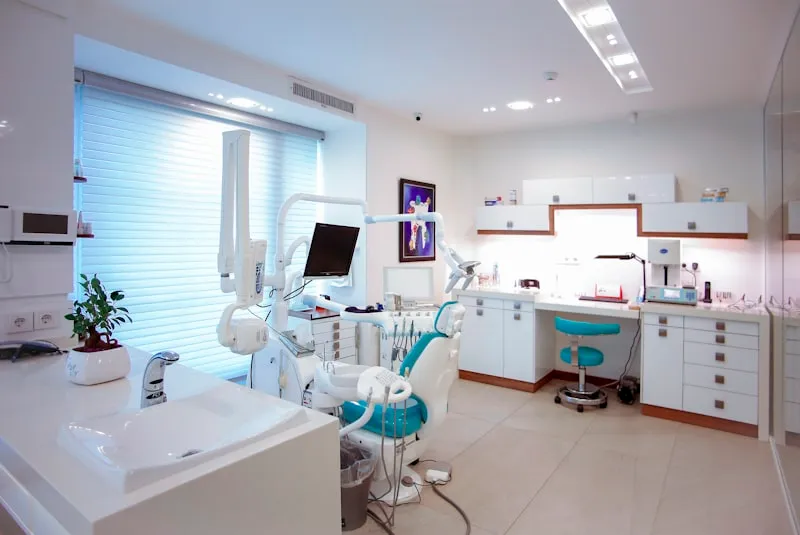
Dental Office Cleaning in Sterling, MA
Clinical-grade cleaning for dental practices in Sterling and across Worcester County. Founded by a 22-year clinical veteran. $2M insured.
What dental office cleaning covers in Sterling
Our Sterling program for dental practices is written around one risk — procedural aerosol and waterline biofilm — and one set of surfaces: operatory surfaces, suction lines, sterilisation area clean/dirty divide.
Facility types we clean under this service:
- General Dentistry
- Orthodontics
- Oral Surgery
- Periodontics
Usually arranged with the office manager / practice-owner dentist.
Sterling: the local picture
- Municipal form: Town
- County: Worcester County
- Region: Central Massachusetts
- Population: 7,985 (2020 U.S. Census)
- Land area: 30.6 sq mi
- Water area: 1.1 sq mi
- Density: about 261 residents per sq mi
- ZIP code: 01564
- From our base: about 13 miles northwest of Marlborough (straight line)
- Typical healthcare setting: skilled nursing
Sterling settings that match this service include Sterling Dental Group (general dental practice); Hamilton Orthodontics (Dr. Carla French Hamilton) (orthodontic practice). They are listed as market context — the kind of dental practice our protocol is written for — not as clients.
Local health authority: Sterling Board of Health (official Sterling page). Healthcare facilities are licensed and surveyed by the Massachusetts Department of Public Health; the local board handles environmental-health matters under the State Sanitary Code and local rules.
Sources: U.S. Census Bureau (2020 Census; Gazetteer files), USPS ZIP codes, and our own verification of local facilities. Distances are straight-line.
How we clean dental practices in Sterling
High-touch surfaces on every visit
- Keyboards and mice in each operatory
- Cabinet and drawer pulls
- Waiting-room chair arms
- Restroom fixtures
- Door handles and light switches
- Hand-washing sink handles
What the crew does, in order
- Confirm which clinical contact surfaces and barriers your dental assistants handle between patients.
- Keep the sterilization area's clean and dirty sides separate: separate cloths, clean side first, never back again.
- Clean housekeeping surfaces — floors, walls, counters outside the operatory field — with an EPA-registered disinfectant.
- Wipe operatory surfaces that are not barrier-protected at end of day, following the practice's product choice.
- Leave dental unit waterlines, suction traps and instrument reprocessing to trained clinical staff.
Frequency, area by area
- Clinical contact surfaces: between patients by the dental team (or barrier change).
- Operatories and sterilization area housekeeping surfaces: daily after the last patient.
- Waiting room and restrooms: daily, with high-touch points more often in busy practices.
Practices with Saturday hours usually need a weekend visit or an early Monday clean.
Records for your surveyors
- Operatory-by-operatory cleaning checklist
- Product list with EPA registration numbers and contact times
- Safety Data Sheets for every product
- Service logs signed each visit
Survey findings we help Sterling facilities prevent
Real, published regulatory findings — every citation links to its source.
CDC Summary of Infection Prevention Practices in Dental Settings (2016) — amount, dilution, contact time, safe use and disposal
Manufacturer instructions for the disinfectant not followed — wrong dilution, wrong contact time, expired or badly stored solution, or solutions not made up fresh daily where the label requires it.
CDC Best Practices, disposing of medical waste; OSHA 29 CFR 1910.1030(d)(4)(iii)
Regulated medical waste not segregated or contained correctly — blood-soaked gauze and extracted teeth in ordinary trash rather than a leak-resistant biohazard bag, sharps outside a labelled puncture-resistant container.
29 CFR 1910.1030(d)(4)(i); Massachusetts adopts this at 234 CMR 5.05(2), and 234 CMR 5.05(1) requires compliance with the CDC dental infection control guidelines
No written schedule for cleaning and method of decontamination determined and implemented for the practice.
Before you sign with a cleaning company
- How do you handle an aerosol-heavy day in terms of end-of-day cleaning?
- What logs will we have for a Board of Registration in Dentistry inspection?
- Who holds bloodborne pathogen training on your crew?
We answer each of these in writing after the free assessment.
Sterling questions, answered
Yes. Sterling (Worcester County) is one of the 109 Massachusetts cities and towns we serve. It is about 13 miles northwest of our Marlborough base in a straight line. Every engagement starts with a free on-site assessment; call (978) 307-8107.
All of them: 01564. If your facility sits on a town line, tell us the street address and we will confirm.
The Sterling Board of Health; its official page is https://www.sterling-ma.gov/256/Board-of-Health. Clinics, hospitals and long-term care facilities are licensed and surveyed by the Massachusetts Department of Public Health, while the local board of health handles local environmental-health matters under the State Sanitary Code and local regulations. Our cleaning records are kept so they serve both.
No. Surface barriers on clinical contact surfaces are changed between patients by the clinical team, and the surface underneath is checked for soiling when the barrier comes off. That is a between-patient task in an occupied operatory, described in the CDC Summary of Infection Prevention Practices in Dental Settings (2016) under environmental infection prevention and control. Our crews arrive when the operatories are empty. What we can do is confirm barriers are in place at the start of the day and clean and disinfect the surfaces beneath them on the end-of-day pass.
Yes. A low-level disinfectant is not adequate where blood contamination is visible. CDC best practice for dental clinical contact surfaces calls for an EPA-registered intermediate-level disinfectant with a tuberculocidal claim in that situation, and the organic soil must be cleaned off before the disinfectant is applied, because organic matter inactivates many products. Our crews carry both levels and are trained on when to escalate. If the blood is fresh and the operatory is in use, it is your staff's job rather than ours, because it should not wait for our visit.
No, and be cautious with any cleaning contractor who says yes. Dental treatment water must be maintained at 500 CFU/mL or fewer, with treatment and monitoring performed on the manufacturer's schedule, per the CDC Summary of Infection Prevention Practices in Dental Settings (2016) section on dental unit water quality. Independent water bottles alone do not achieve that. Waterline treatment is a clinical protocol tied to the specific unit and the specific product, with its own testing records, and it belongs to your team. We clean the exterior of the unit and the surrounding area.
Neighboring towns we serve
Free dental office cleaning assessment in Sterling
22+ years clinical experience. $2M insured. No obligation.