Dental Office Cleaning in Weston, MA
Serving Weston from our Marlborough base, about 13 miles east. Written scope, EPA-registered products, signed logs.
What dental office cleaning covers in Weston
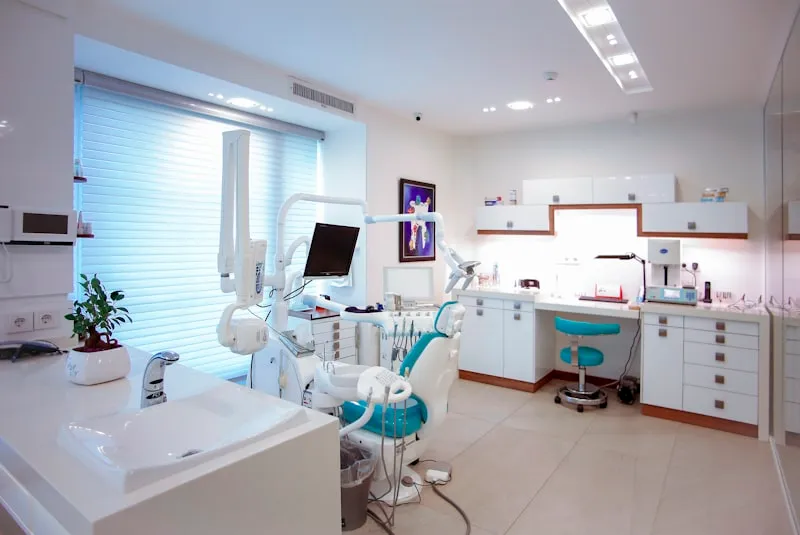
Our Weston program for dental practices is written around one risk — procedural aerosol and waterline biofilm — and one set of surfaces: operatory surfaces, suction lines, sterilisation area clean/dirty divide.
Facility types we clean under this service:
- General Dentistry
- Orthodontics
- Oral Surgery
- Periodontics
Usually arranged with the office manager / practice-owner dentist.
Weston: the local picture
- Municipal form: Town
- County: Middlesex County
- Region: MetroWest
- Population: 11,851 (2020 U.S. Census)
- Land area: 16.8 sq mi
- Water area: 0.5 sq mi
- Density: about 704 residents per sq mi
- ZIP code: 02493
- From our base: about 13 miles east of Marlborough (straight line)
- Typical healthcare setting: senior living communities
Weston settings that match this service include Dillaway Family Dentistry PC (general dental practice); Weston Dental Group (general dental practice). They are listed as market context — the kind of dental practice our protocol is written for — not as clients.
Local health authority: Weston Board of Health (official Weston page). Healthcare facilities are licensed and surveyed by the Massachusetts Department of Public Health; the local board handles environmental-health matters under the State Sanitary Code and local rules.
Sources: U.S. Census Bureau (2020 Census; Gazetteer files), USPS ZIP codes, and our own verification of local facilities. Distances are straight-line.
How we clean dental practices in Weston
Where contamination concentrates
- Keyboards and mice in each operatory
- Cabinet and drawer pulls
- Sterilization-area counters on the clean side
- Front-desk counter and payment terminal
- Waiting-room chair arms
- Restroom fixtures
What the crew does, in order
- Confirm which clinical contact surfaces and barriers your dental assistants handle between patients.
- Keep the sterilization area's clean and dirty sides separate: separate cloths, clean side first, never back again.
- Clean housekeeping surfaces — floors, walls, counters outside the operatory field — with an EPA-registered disinfectant.
- Wipe operatory surfaces that are not barrier-protected at end of day, following the practice's product choice.
- Damp-mop operatory floors, working from the back of the room toward the door.
Frequency, area by area
- Operatories and sterilization area housekeeping surfaces: daily after the last patient.
- Floors: daily in operatories and the sterilization area.
- Waiting room and restrooms: daily, with high-touch points more often in busy practices.
Practices with Saturday hours usually need a weekend visit or an early Monday clean.
What you keep on file
- Operatory-by-operatory cleaning checklist
- Product list with EPA registration numbers and contact times
- Safety Data Sheets for every product
- Service logs signed each visit
What inspectors cite — and how we prevent it
Real, published regulatory findings — every citation links to its source.
CDC Best Practices, disposing of medical waste; OSHA 29 CFR 1910.1030(d)(4)(iii)
Regulated medical waste not segregated or contained correctly — blood-soaked gauze and extracted teeth in ordinary trash rather than a leak-resistant biohazard bag, sharps outside a labelled puncture-resistant container.
CDC Summary of Infection Prevention Practices in Dental Settings (2016), Dental Unit Water Quality
Dental treatment water not maintained to drinking-water quality of 500 CFU/mL or fewer, or waterline treatment and monitoring not performed to the manufacturer's schedule. Independent water bottles alone are not sufficient.
29 CFR 1910.1030(d)(4)(i); Massachusetts adopts this at 234 CMR 5.05(2), and 234 CMR 5.05(1) requires compliance with the CDC dental infection control guidelines
No written schedule for cleaning and method of decontamination determined and implemented for the practice.
Questions worth asking at the walkthrough
- How will your crew keep the clean and dirty sides of our sterilization area separate?
- What will you never touch in the operatory?
- How do you handle an aerosol-heavy day in terms of end-of-day cleaning?
We answer each of these in writing after the free assessment.
Dental Office Cleaning in Weston — common questions
Verified examples include Dillaway Family Dentistry PC (general dental practice); Weston Dental Group (general dental practice). We list them as local market context; they are not presented as our clients.
The Weston Board of Health; its official page is https://www.westonma.gov/400/Board-of-Health. Clinics, hospitals and long-term care facilities are licensed and surveyed by the Massachusetts Department of Public Health, while the local board of health handles local environmental-health matters under the State Sanitary Code and local regulations. Our cleaning records are kept so they serve both.
The closest served towns to Weston are Wayland (about 2.9 mi), Waltham (about 3.7 mi), Wellesley (about 3.9 mi). See the full list on our service areas page.
By treating the divide as fixed. Crews are trained not to move, reorganize, or carry instruments, cassettes, or pouches between the receiving and decontamination side and the clean packaging and storage side. Cleaning runs clean side first and dirty side last, with separate cloths under a color-coded system, never the reverse. Nothing is set down on a clean counter in order to free up a surface. Anything ambiguous is left in place and reported instead of relocated. Instrument reprocessing itself is entirely your team's function, and we do not participate in it.
It changes the surface list, not just the frequency. Spatter and aerosol settle well beyond the immediate chairside zone, so our end-of-day pass covers horizontal surfaces at and above chair height, cabinet fronts, light arms, the sides and base of the unit, and the floor around the chair, not only the counters your team wipes between patients. The CDC Summary of Infection Prevention Practices in Dental Settings (2016) expects routine environmental cleaning and disinfection to be set out in written policies and procedures; the surface list becomes part of yours.
No. Evacuation line cleaning and trap changes are clinical equipment maintenance, performed to the line cleaner manufacturer's instructions by your staff, and the wrong chemistry in those lines can damage the unit. We do not open traps or introduce anything into the lines. We clean the surrounding cabinetry, the sink, and the floor beneath, and we will report a trap that is visibly overdue or a line cleaner container that has run empty, so it gets attention rather than being missed until the next scheduled maintenance.
Also serving near Weston
Free dental office cleaning assessment in Weston
22+ years clinical experience. $2M insured. No obligation.