
Medical Office Cleaning in Douglas, MA
Medical office cleaning built on CDC and OSHA practice, documented visit by visit, for Douglas facilities. $2M insured.
Douglas medical offices: how we clean
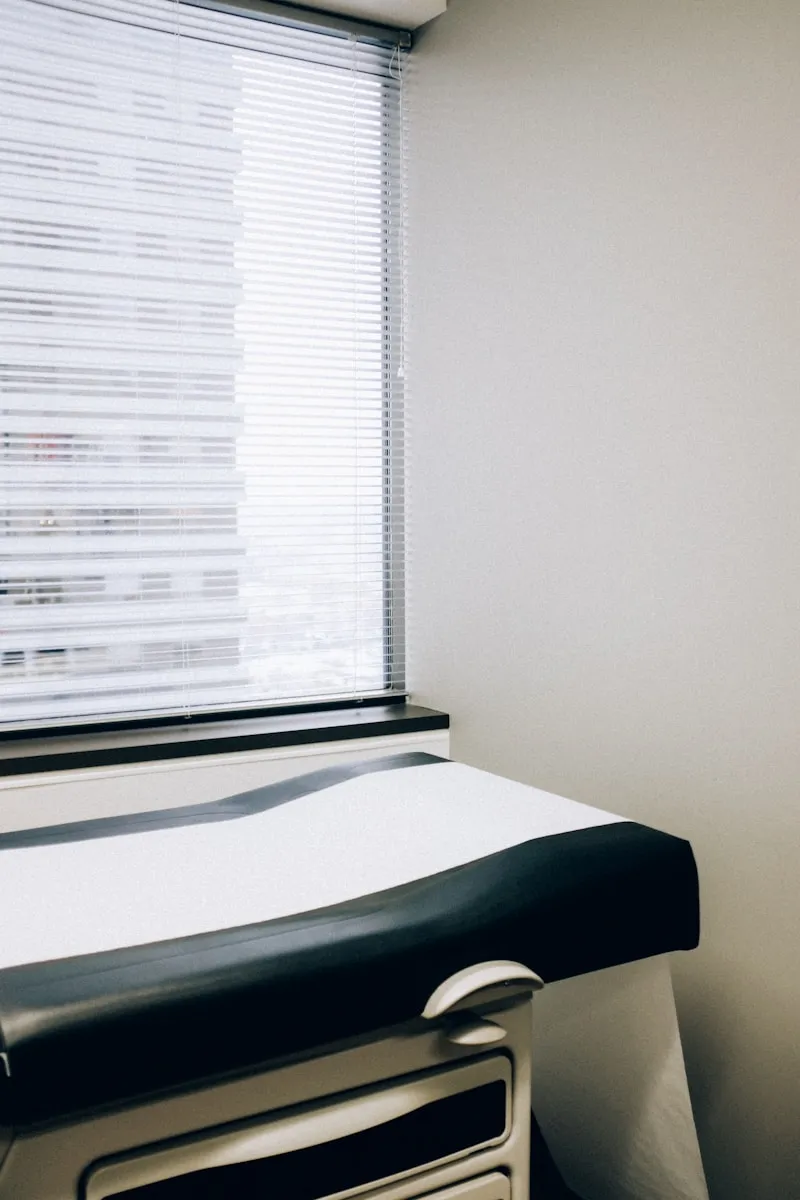
For medical offices in Douglas, the risk we plan around is patient-to-patient transfer via high-touch surfaces between visits. The surfaces that decide the outcome: exam tables, blood pressure cuffs, door hardware, waiting-room touch points.
Facility types we clean under this service:
- Physician Practices
- Urgent Care
- OB/GYN
- Pediatrics
Usually arranged with the practice manager.
About Douglas, MA
- Municipal form: Town
- County: Worcester County
- Region: Blackstone Valley
- Population: 8,983 (2020 U.S. Census)
- Land area: 36.4 sq mi
- Water area: 1.5 sq mi
- Density: about 247 residents per sq mi
- ZIP code: 01516
- From our base: about 23 miles southwest of Marlborough (straight line)
- Typical healthcare setting: primary care offices
Douglas settings that match this service include UMass Memorial Medical Group — Douglas Primary Care (primary care office in a small multi-tenant medical building). They are listed as market context — the kind of medical office our protocol is written for — not as clients.
Local health authority: Douglas Board of Health (official Douglas page). Healthcare facilities are licensed and surveyed by the Massachusetts Department of Public Health; the local board handles environmental-health matters under the State Sanitary Code and local rules.
Sources: U.S. Census Bureau (2020 Census; Gazetteer files), USPS ZIP codes, and our own verification of local facilities. Distances are straight-line.
Inside a Douglas service visit
Where contamination concentrates
- Rolling stools and exam-room chairs
- Computer keyboards, mice and wall-mounted screens
- Door handles and push plates
- Light switches
- Sink faucet handles and soap dispensers
- Check-in counter and sign-in tablet
Our sequence, step by step
- Agree the room-by-room scope and who disinfects patient-contact surfaces between visits.
- Start each visit in the cleanest areas (offices, consult rooms) and finish in restrooms and soiled utility.
- Clean visibly soiled surfaces before disinfecting; the label claim assumes a pre-cleaned surface.
- Apply an EPA-registered hospital disinfectant and keep each surface wet for its full label contact time.
- Damp-mop hard floors and vacuum carpeted waiting areas with HEPA-filtered equipment.
How often
- Waiting room and check-in: high-touch points several times a day in busy clinics, full clean daily.
- Restrooms: at least daily, more often in high-volume practices.
- Floors: daily damp-mop of hard floors; carpet vacuumed daily and extracted on a periodic schedule.
Practices with early clinics often prefer an evening clean plus a short midday restroom and waiting-room refresh.
Records for your surveyors
- Room-by-room cleaning schedule with frequencies
- Product list with EPA registration numbers and contact times
- Safety Data Sheets for every product on site
- Signed service logs for each visit
What inspectors cite — and how we prevent it
Real, published regulatory findings — every citation links to its source.
CDC Infection Prevention Checklist for Outpatient Settings, Section II item A; CDC Core Practices 5b
Environmental surfaces in exam rooms, especially those near the patient and frequently touched, not cleaned and then disinfected with an EPA-registered disinfectant.
CDC Infection Prevention Checklist for Outpatient Settings, Section I item C
Staff cleaning the practice have not been trained on, or issued, the PPE needed to avoid exposure to infectious agents and to the disinfectant chemicals themselves.
CDC Infection Prevention Checklist, Section II items I and J; OSHA 29 CFR 1910.1030(d)(4)(iii)
Filled sharps containers not disposed of under state regulated medical waste rules, and regulated waste containers not closable, leak-proof and labelled or colour-coded.
Questions worth asking at the walkthrough
- What will our logs look like if a surveyor asks?
- How do you handle a blood spill found during your visit?
- Who do we call if something is missed?
We answer each of these in writing after the free assessment.
Medical Office Cleaning in Douglas — common questions
Verified examples include UMass Memorial Medical Group — Douglas Primary Care (primary care office in a small multi-tenant medical building). We list them as local market context; they are not presented as our clients.
The Douglas Board of Health; its official page is https://www.douglas-ma.gov/261/Board-of-Health. Clinics, hospitals and long-term care facilities are licensed and surveyed by the Massachusetts Department of Public Health, while the local board of health handles local environmental-health matters under the State Sanitary Code and local regulations. Our cleaning records are kept so they serve both.
The closest served towns to Douglas are Webster (about 4.8 mi), Sutton (about 5.5 mi), Uxbridge (about 5.6 mi). See the full list on our service areas page.
Spills of blood or other potentially infectious material must be decontaminated immediately, not held for the next scheduled visit. 29 CFR 1910.1030(d)(4)(ii)(A) requires decontamination after completion of procedures, immediately after a spill, and at the end of the shift where a surface may have become contaminated. If our crew finds a spill during an evening visit, they treat it as regulated cleanup with the appropriate PPE and disinfectant, and it is logged. If it happens during clinic hours, your staff handle it, because immediately means immediately.
Never by hand. 29 CFR 1910.1030(d)(4)(ii)(D) requires that broken glassware which may be contaminated be picked up using mechanical means such as a brush and dustpan, tongs, or forceps. Our crews carry those tools and are trained not to reach into a container or onto a floor to retrieve glass. Fragments go into a puncture-resistant container that you designate, and the surrounding surface is cleaned and then disinfected. If there is any question of residual sharps risk, we stop and flag it for your staff rather than improvise a method.
Both. 29 CFR 1910.1030(d)(4)(ii)(C) requires that bins, pails, cans, and similar receptacles likely to become contaminated be inspected and decontaminated on a regularly scheduled basis, and cleaned and decontaminated immediately or as soon as feasible when visibly contaminated. Liner changes alone do not satisfy that paragraph. We put receptacle decontamination on a named interval in your written schedule, inspect at every visit, and pull anything visibly soiled out of rotation for cleaning that night rather than waiting for the scheduled cycle.
Nearby medical offices we clean
Free medical office cleaning assessment in Douglas
22+ years clinical experience. $2M insured. No obligation.