Medical Office Cleaning in Reading, MA
Serving Reading from our Marlborough base, about 26 miles northeast. Written scope, EPA-registered products, signed logs.
Reading medical offices: how we clean
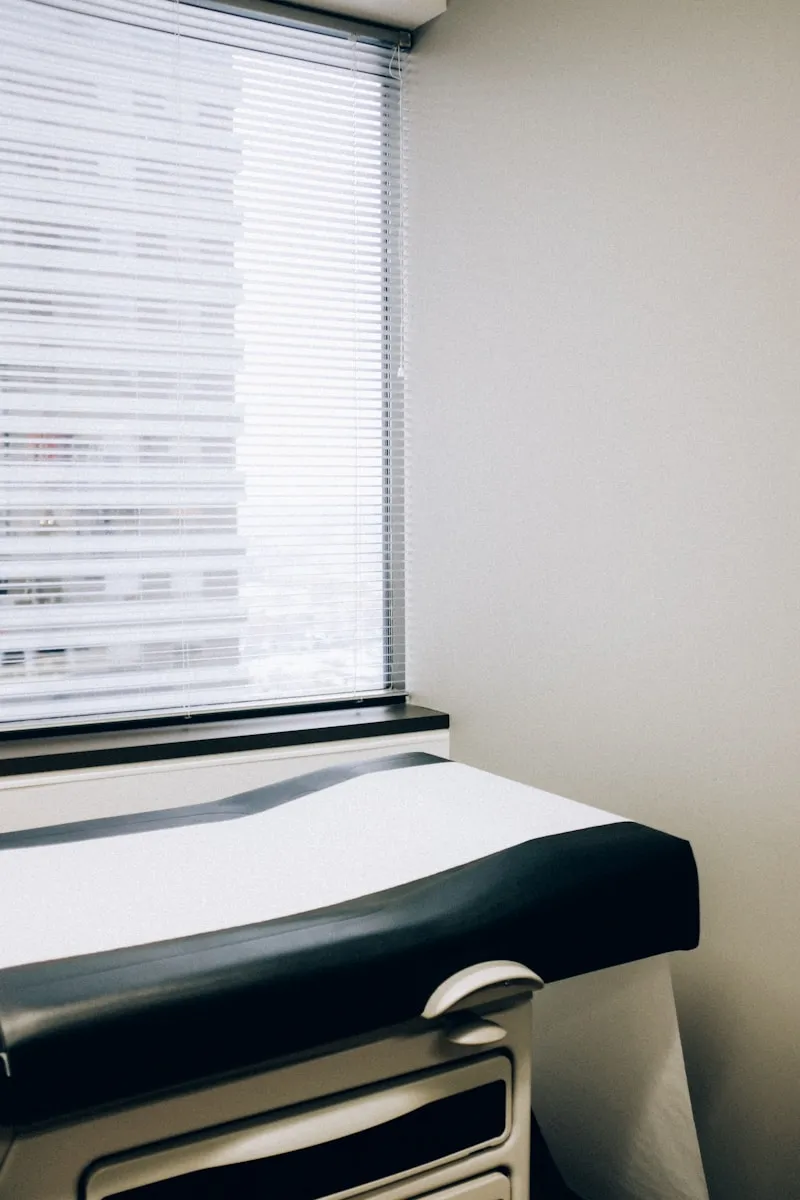
For medical offices in Reading, the risk we plan around is patient-to-patient transfer via high-touch surfaces between visits. The surfaces that decide the outcome: exam tables, blood pressure cuffs, door hardware, waiting-room touch points.
Facility types we clean under this service:
- Physician Practices
- Urgent Care
- OB/GYN
- Pediatrics
Usually arranged with the practice manager.
About Reading, MA
- Municipal form: Town
- County: Middlesex County
- Region: Greater Boston
- Population: 25,518 (2020 U.S. Census)
- Land area: 10.0 sq mi
- Density: about 2,557 residents per sq mi
- ZIP code: 01867
- From our base: about 26 miles northeast of Marlborough (straight line)
- Typical healthcare setting: hospital-affiliated primary care and outpatient offices
Reading settings that match this service include Winchester Hospital Reading Health Center (outpatient center); Beth Israel Lahey Health Primary Care — Reading Internal Medicine Associates (primary care office). They are listed as market context — the kind of medical office our protocol is written for — not as clients.
Local health authority: Reading Board of Health (official Reading page). Healthcare facilities are licensed and surveyed by the Massachusetts Department of Public Health; the local board handles environmental-health matters under the State Sanitary Code and local rules.
Sources: U.S. Census Bureau (2020 Census; Gazetteer files), USPS ZIP codes, and our own verification of local facilities. Distances are straight-line.
What inspectors cite — and how we prevent it
Real, published regulatory findings — every citation links to its source.
29 CFR 1910.1030(d)(4)(ii)(D)
Broken contaminated glassware picked up by hand instead of by mechanical means such as a brush and dustpan, tongs or forceps.
CDC Infection Prevention Checklist for Outpatient Settings, Section I item C
Staff cleaning the practice have not been trained on, or issued, the PPE needed to avoid exposure to infectious agents and to the disinfectant chemicals themselves.
CDC Infection Prevention Checklist, Section II items I and J; OSHA 29 CFR 1910.1030(d)(4)(iii)
Filled sharps containers not disposed of under state regulated medical waste rules, and regulated waste containers not closable, leak-proof and labelled or colour-coded.
How we clean medical offices in Reading
Where contamination concentrates
- Rolling stools and exam-room chairs
- Computer keyboards, mice and wall-mounted screens
- Pens, clipboards and payment terminals
- Waiting-room chair arms
- Restroom flush handles, grab bars and door locks
- Scale platform and height rod
What the crew does, in order
- Apply an EPA-registered hospital disinfectant and keep each surface wet for its full label contact time.
- Change cloths between rooms using a color-coded system so restroom cloths never reach exam rooms.
- Empty trash and recycling; leave sharps containers and regulated medical waste to your licensed hauler.
- Damp-mop hard floors and vacuum carpeted waiting areas with HEPA-filtered equipment.
- Record rooms completed, products used and any issues in the service log.
How often
- Restrooms: at least daily, more often in high-volume practices.
- Floors: daily damp-mop of hard floors; carpet vacuumed daily and extracted on a periodic schedule.
- Walls, vents and light fixtures: on a periodic schedule or when visibly soiled.
Most medical offices are cleaned after the last patient leaves, so exam rooms are ready for the first morning appointment.
Documentation you receive
- Room-by-room cleaning schedule with frequencies
- Product list with EPA registration numbers and contact times
- Certificate of insurance naming the practice
- ATP or fluorescent-marker results when verification is performed
Questions to ask any Reading cleaning vendor
- What will our logs look like if a surveyor asks?
- How do you handle a blood spill found during your visit?
- Can you verify cleaning with ATP or fluorescent markers?
We answer each of these in writing after the free assessment.
Medical Office Cleaning in Reading — common questions
Yes. Reading (Middlesex County) is one of the 109 Massachusetts cities and towns we serve. It is about 26 miles northeast of our Marlborough base in a straight line. Every engagement starts with a free on-site assessment; call (978) 307-8107.
Verified examples include Winchester Hospital Reading Health Center (outpatient center); Beth Israel Lahey Health Primary Care — Reading Internal Medicine Associates (primary care office). We list them as local market context; they are not presented as our clients.
The Reading Board of Health; its official page is https://www.readingma.gov/361/Board-of-Health. Clinics, hospitals and long-term care facilities are licensed and surveyed by the Massachusetts Department of Public Health, while the local board of health handles local environmental-health matters under the State Sanitary Code and local regulations. Our cleaning records are kept so they serve both.
Yes. 29 CFR 1910.1030(d)(4)(i) requires a written schedule for cleaning and a method of decontamination determined by the location within the facility, the type of surface, the type of soil present, and the procedures performed in that area. We build that document with you room by room, and it names the product, the dilution, the contact time, and the frequency for each surface class. It is written so a compliance officer can read it and match it against what our crews actually do. You own the document, and it lives with your exposure control plan.
More likely than most practice managers assume. Between October 2024 and September 2025, federal OSHA cited 29 CFR 1910.1030 thirty-three times across twelve inspections of physicians' offices, out of 55 citations issued to the sector in that period. That makes the Bloodborne Pathogens Standard the most-cited standard for physician practices, and the housekeeping paragraphs at (d)(4) are a routine part of it. Inspections in this sector are usually complaint or referral driven, so the trigger is often an employee rather than a scheduled visit.
EPA-registered products, drawn from EPA List N where an emerging viral pathogen claim is needed, and matched to the surface and the soil load. The controlling document is the manufacturer's label: dilution, contact time, shelf life, and storage. Most failures we correct are contact time failures, where the surface is dry well before the label kill time. Our crews clean first, then disinfect, and keep the surface visibly wet for the labeled dwell. Product labels and SDS sheets stay on site in your binder so you can check them without calling us.
Nearby medical offices we clean
Free medical office cleaning assessment in Reading
22+ years clinical experience. $2M insured. No obligation.