
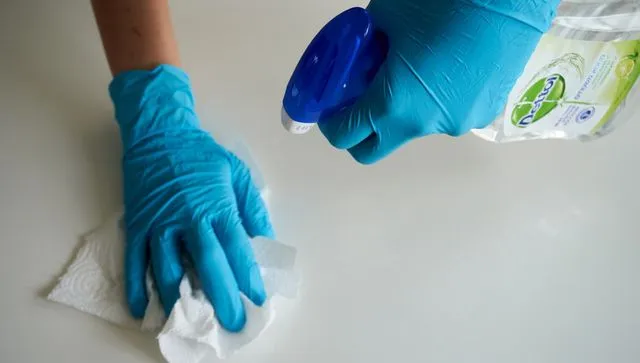
Skilled Nursing & Long-Term Care Cleaning in Randolph, MA
Serving Randolph from our Marlborough base, about 28 miles southeast. Written scope, EPA-registered products, signed logs.
Skilled Nursing & Long-Term Care Cleaning for Randolph facilities
In a skilled nursing facility, most cleaning failures happen at resident rooms, common areas, dining, assisted bathing. That is where our Randolph crews start, because the underlying risk is outbreak — C. difficile, norovirus, influenza — in a vulnerable resident population.
Facility types we clean under this service:
- Skilled Nursing Facilities
- Long Term Care
- Rehabilitation Hospitals
Usually arranged with the director of nursing / administrator.
We give rehabilitation clinics and senior care facilities particular focus — see how we clean them.
About Randolph, MA
- Municipal form: Town
- County: Norfolk County
- Region: South Shore
- Population: 34,984 (2020 U.S. Census)
- Land area: 9.8 sq mi
- Water area: 0.6 sq mi
- Density: about 3,560 residents per sq mi
- ZIP code: 02368
- From our base: about 28 miles southeast of Marlborough (straight line)
- Typical healthcare setting: independent primary care and small private practices
We have not verified a skilled nursing facility inside Randolph itself; the closest verified ones on our routes are in Braintree (about 3.3 mi) and Canton (about 3.8 mi). If your skilled nursing facility is in Randolph, call (978) 307-8107 and we will confirm scheduling for your address before the assessment.
Local health authority: Randolph Health Department (official Randolph page). Healthcare facilities are licensed and surveyed by the Massachusetts Department of Public Health; the local board handles environmental-health matters under the State Sanitary Code and local rules.
Sources: U.S. Census Bureau (2020 Census; Gazetteer files), USPS ZIP codes, and our own verification of local facilities. Distances are straight-line.
Inside a Randolph service visit
Where contamination concentrates
- Call buttons
- Bedside tables and drawer pulls
- Resident chairs and wheelchair armrests
- Grab bars and toilet seats
- Sink and faucet handles
- Dining tables and chairs
Our sequence, step by step
- Agree the daily resident-room clean, discharge cleaning and what nursing staff handle.
- Clean resident rooms daily with the resident's dignity and privacy respected.
- Discharge-clean rooms after a resident leaves, including all furniture and fixtures.
- Clean common areas — dining, activity rooms, corridors — on a set daily schedule.
- Damp-mop floors with attention to fall risk and wet-floor signage.
How often
- Common areas and dining: daily and after meals as directed.
- Corridor handrails and elevator buttons: several times a day.
- Outbreaks: escalated frequency and products as the infection preventionist directs.
Discharge cleaning has to fit admission times, so the schedule is agreed with the admissions team.
Records for your surveyors
- Daily and discharge room checklists
- Common-area schedule
- Product list with EPA registration numbers and contact times
- Safety Data Sheets
Citations Randolph skilled nursing facilities can avoid
Real, published regulatory findings — every citation links to its source.
F925 — 42 CFR 483.90(i)(4), Maintains Effective Pest Control Program
No effective pest control programme — evidence of flies, ants, roaches or rodents, or a programme that is not maintained or documented.
F908 — 42 CFR 483.90(d)(2), Essential Equipment in Safe Operating Condition
Essential equipment not maintained in safe operating condition, including dietary, laundry and resident-care equipment found broken, soiled, or not maintained to the manufacturer's instructions.
29 CFR 1910.1030 — OSHA Bloodborne Pathogens
Bloodborne pathogens programme deficiencies — exposure control plan, regulated waste and contaminated laundry handling, decontamination of work surfaces and equipment, sharps containers, PPE and training.
Questions to ask any Randolph cleaning vendor
- How will your staff interact with residents while cleaning their rooms?
- What changes in your routine during a norovirus or C. difficile outbreak?
- How do you manage wet-floor fall risk in corridors?
We answer each of these in writing after the free assessment.
Nursing Home Cleaning in Randolph — common questions
Yes. Randolph (Norfolk County) is one of the 109 Massachusetts cities and towns we serve. It is about 28 miles southeast of our Marlborough base in a straight line. Every engagement starts with a free on-site assessment; call (978) 307-8107.
All of them: 02368. If your facility sits on a town line, tell us the street address and we will confirm.
The Randolph Health Department; its official page is https://www.randolph-ma.gov/341/Health-Department. Clinics, hospitals and long-term care facilities are licensed and surveyed by the Massachusetts Department of Public Health, while the local board of health handles local environmental-health matters under the State Sanitary Code and local regulations. Our cleaning records are kept so they serve both.
Yes, and it should be written into the contract before you need it — outbreak surge is a staffing commitment, not a good intention. Practically it means moving high-touch disinfection in the affected unit to a defined multiple-times-daily cycle, switching to a sporicidal or a norovirus-labeled product, dedicating equipment to the affected wing so carts do not travel between units, and increasing attention to shared bathrooms and dining. We ask for the unit boundary and the end date from your infection preventionist. We do not decide when precautions start or stop; that is a clinical call.
F584 (42 CFR 483.10(i)) treats a clean, comfortable, homelike environment as a resident right, and it was cited at 17.2% of Massachusetts facilities. Odor is usually cleaning — carpet and upholstery saturation, floor drains, trash holding, delayed incontinence cleanup. Stained mattresses, torn privacy curtains, chipped casework and damaged flooring are replacement items. We separate the two for you: we resolve what cleaning resolves and issue a written condition report on what it cannot, dated. That report is useful evidence that the facility identified and acted on a problem, which is often what the surveyor is really testing.
We do not apply pesticides — that requires a licensed applicator, and Massachusetts does not license cleaning companies for it. What we control is the conditions F925 (42 CFR 483.90(i)(4)) actually turns on: trash removal frequency, dumpster area cleanliness, food debris in resident rooms and pantries, drain and floor-crevice cleaning, and storage kept off the floor. We report sightings and evidence in writing so your pest contractor's log shows a facility that reported and responded. F925 is cited at 2.0% of Massachusetts facilities but often at wide scope, which raises the severity of an otherwise small finding.
All 10 questions on skilled nursing & long-term care cleaning
Nearby skilled nursing facilities we clean
Free skilled nursing & long-term care cleaning assessment in Randolph
22+ years clinical experience. $2M insured. No obligation.