"How often should we disinfect high-touch surfaces?" is the question practice managers ask us most, and the honest answer is that no single number is correct for every room. Federal guidance does not publish a universal schedule. It publishes a method: rank each surface by how often hands touch it, how vulnerable the people in the room are, and how likely the surface is to be contaminated — then clean the riskiest surfaces most often. This guide turns that method into working schedules for Massachusetts medical offices, clinics, outpatient centers and long-term care facilities.
What Counts as a High-Touch Surface?
The CDC/HICPAC Guidelines for Environmental Infection Control in Health-Care Facilities split environmental surfaces into two groups: high-touch surfaces that hands contact constantly, and minimal-touch housekeeping surfaces such as floors, walls, window sills and ceilings. The guideline's core instruction is simple — clean and disinfect high-touch surfaces more frequently than minimal-touch ones.
CDC's Options for Evaluating Environmental Cleaning toolkit names the objects hospitals should monitor in every patient room. The list is a useful starting inventory for any clinical space:
- Bed rails and bed controls, over-bed tray tables and call buttons
- Bedside tables and their handles, patient chairs and chair arms
- Telephones, TV remotes and any shared keyboard or tablet
- Light switches, door knobs and door levers, cabinet pulls
- Sink faucet handles, soap and sanitizer dispensers
- Toilet seats, flush handles, grab bars and bedpan cleaners
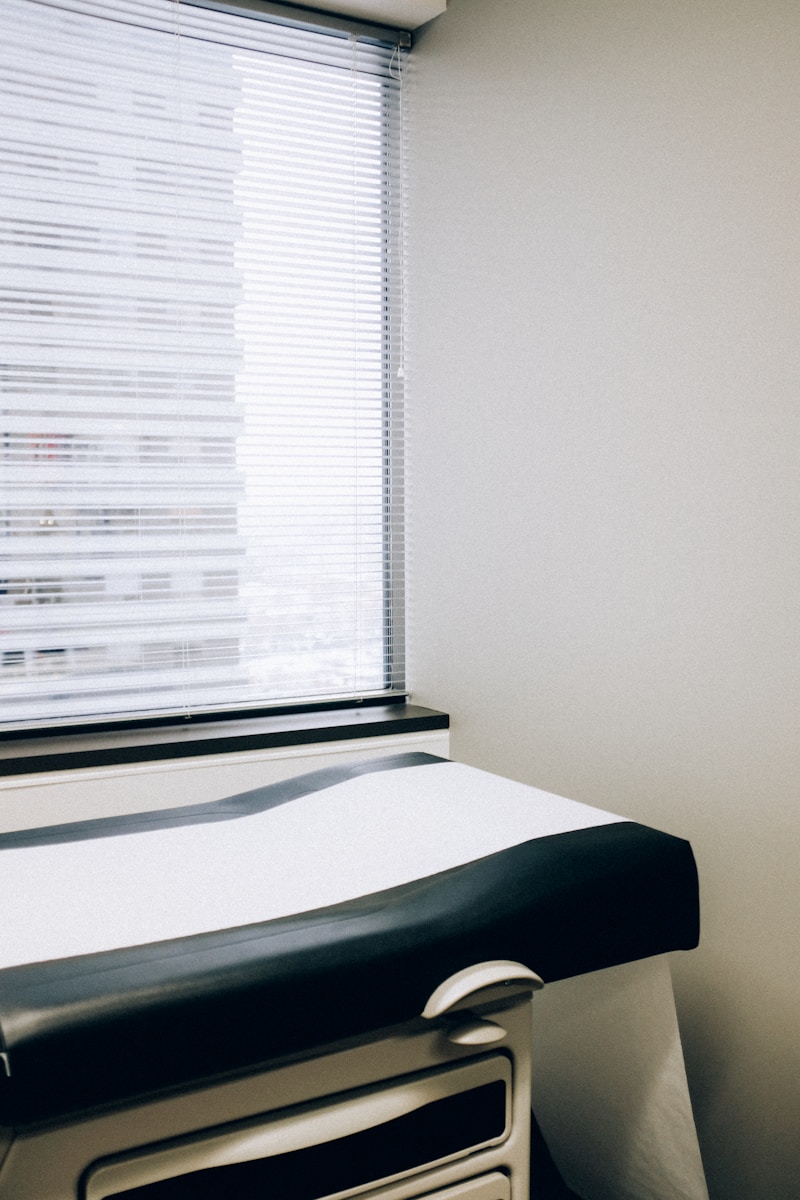
Outpatient settings add their own high-touch points: exam table surfaces and stirrups, blood pressure cuffs, pulse oximeters, otoscope and ophthalmoscope handles, rolling stools, check-in counters, clipboards and pens, payment terminals, and waiting-room chair arms.
Why Frequency Matters: How Long Pathogens Survive
Surface frequency matters because many of the organisms behind healthcare-associated infections outlast a normal cleaning cycle by a wide margin. A frequently cited 2006 systematic review by Kramer, Schwebke and Kampf (BMC Infectious Diseases) reported that on dry inanimate surfaces:
- Clostridioides difficile spores can persist for up to five months;
- MRSA can persist from days to months;
- vancomycin-resistant enterococci (VRE) can persist from days to months.
A contaminated bed rail or exam table that is only wiped at the end of the day can therefore touch many patients' hands first. Frequency is how a facility shortens that window.
The Risk-Based Method CDC Recommends
CDC and ICAN's 2019 Best Practices for Environmental Cleaning in Healthcare Facilities ties cleaning frequency to three risk factors for each area:
- Probability of contamination — how likely the surface is to pick up blood, body fluids or pathogens (a procedure room outranks an office).
- Vulnerability of the people exposed — immunocompromised, elderly, dialysis or post-surgical patients raise the stakes.
- Potential for exposure — how often hands touch the surface (high-touch versus low-touch).
Areas that score high on all three get more frequent cleaning and more thorough methods. Areas that score low get routine cleaning. The document also distinguishes the patient zone — the surfaces around one patient — from the wider healthcare zone, and emphasises cleaning the patient zone between patients in outpatient care.
Recommended Frequencies by Facility Type
The schedules below are the defaults we build into Dory's service plans. They apply the risk-based method above; your facility's infection preventionist, policies and product labels always take precedence.
| Setting | High-touch surfaces | Full room / terminal |
|---|---|---|
| Medical office exam room | Patient-contact surfaces after every patient (usually by clinical staff); all high-touch points at least daily | Daily, end of clinic day |
| Waiting room and check-in | Counters, pens, payment terminals and chair arms several times per day during peak hours, plus daily | Daily |
| Procedure room / minor surgery | Between every procedure | End of day terminal clean |
| Dental operatory | Clinical contact surfaces between every patient (or barrier change) | End of day |
| Urgent care | Patient zone between patients; isolation or suspected-infection rooms immediately after discharge | At least daily, terminal clean after isolation use |
| Dialysis station | Chair and station surfaces between every treatment | Daily |
| Skilled nursing / long-term care resident room | At least daily; more often during outbreaks or for residents on contact precautions | On discharge or transfer |
| Shared restrooms | At least twice daily in outpatient settings; more with heavy traffic | Daily |
Two points matter more than the exact numbers. First, between-patient cleaning is a workflow decision: in most offices, clinical staff disinfect patient-contact surfaces between visits and the environmental services team handles the daily clean. The written policy has to say who does what, or both groups assume the other did it. Second, outbreaks change the schedule: during a norovirus, influenza, COVID-19 or C. difficile cluster, frequency and product selection should be escalated under the direction of your infection preventionist.
Frequency Is Useless Without Contact Time
A disinfectant only achieves the kill claims on its EPA label if the surface stays visibly wet for the full contact time (also called dwell time). Depending on the product and the organism, that can be anywhere from about one minute to ten minutes. Wiping a rail and drying it thirty seconds later is not disinfection, no matter how often it happens.
- Choose products whose label claims match your risk — for example, a sporicidal claim for C. difficile rooms.
- Use enough product (or enough wipes) to keep the surface wet for the full contact time.
- Clean first when a surface is visibly soiled; most disinfectants are labelled for pre-cleaned surfaces.
- Work from clean to dirty and from high to low, and change cloths between patient zones so one cloth never carries organisms from one bed space to the next.
Our EPA-registered disinfectants guide covers product selection and label reading in detail.
How to Verify That High-Touch Cleaning Is Actually Happening
Frequency on paper and frequency in practice are different things. In a widely cited multi-hospital study, Carling and colleagues (2008) marked standardized high-touch objects with an invisible fluorescent gel and found that fewer than half were cleaned during terminal room cleaning at baseline. Performance improved substantially once the facilities started measuring and feeding the results back to staff.
Three monitoring methods are practical for Massachusetts outpatient and long-term care facilities:
- Fluorescent marking: a dot of invisible gel on selected objects before cleaning, checked with a UV light afterward. Cheap and excellent for coaching.
- ATP bioluminescence: a swab and handheld reader that measures organic residue in seconds. It does not identify organisms, but it shows whether a surface was actually cleaned. See our free ATP facility assessment.
- Direct observation with a checklist: a supervisor watches the process and scores it against the written procedure.
Whatever you use, record the results. A log of scores over time is the evidence surveyors and accrediting bodies look for.
Documentation Surveyors Expect
Massachusetts Department of Public Health licensure rules for clinics (105 CMR 140.000) and long-term care facilities (105 CMR 150.000) expect written infection control and housekeeping practices, and accreditation surveys follow the same thread. At a minimum, keep:
- A written cleaning schedule that lists each area, its high-touch surfaces, the frequency, the product and who is responsible;
- Completion logs signed or initialled by the person who did the work;
- Monitoring results (fluorescent, ATP or observation) and any corrective action;
- Safety Data Sheets and EPA registration numbers for every product in use;
- Training records, including OSHA Bloodborne Pathogens training where staff may contact blood or other potentially infectious materials.
We cover the regulatory side in more depth in our Massachusetts healthcare sanitation regulations guide and our inspection preparation guide.
Common Mistakes We See
- One schedule for the whole building. Treating a procedure room like a break room either overspends on low-risk areas or under-cleans high-risk ones.
- Skipping the "invisible" high-touch points. Light switches, cabinet pulls, stool handles and payment terminals are missed far more often than exam tables.
- Spraying instead of wiping. Foggers and electrostatic sprayers can supplement manual cleaning; they do not remove soil and are not a substitute for wiping high-touch surfaces.
- Nobody owns between-patient cleaning. If the policy does not assign it, it will be done inconsistently.
- No measurement. Without fluorescent, ATP or observation data, a facility cannot know whether its schedule is being followed.
Frequently Asked Questions
Is there a legal minimum frequency for disinfecting high-touch surfaces?
Federal guidance does not set a single mandatory number. CDC recommends that high-touch surfaces be cleaned more often than minimal-touch surfaces and that frequency follow a risk assessment. Your facility's written policy — informed by CDC guidance, product labels and your infection preventionist — becomes the standard you are surveyed against.
Should high-touch surfaces be disinfected between every patient?
Surfaces in the patient zone that the patient touched, or that were contaminated during care, should be cleaned and disinfected before the next patient uses them. That is standard in exam rooms, dental operatories, dialysis stations and procedure rooms.
Does more frequent cleaning mean stronger disinfectants?
No. Frequency and product strength are separate decisions. Most high-touch surfaces in outpatient care need an EPA-registered hospital disinfectant used at the full label contact time; sporicidal products are reserved for situations such as C. difficile.
How do we know our cleaning schedule is working?
Measure it. Fluorescent marking, ATP testing and direct observation all give objective evidence, and trending the results over time shows whether performance is improving.
Build a Schedule That Fits Your Facility
Dory's Cleaning Services builds high-touch schedules room by room, assigns every task to a named role, and verifies the work with ATP testing and documented checklists. If you manage a medical office, clinic, outpatient center or long-term care facility in Massachusetts, request a free facility assessment or call (978) 307-8107.
Where this applies
We put this guide into practice in these services across 109 Massachusetts cities and towns: